
The majority of schemes and routes to fellowship do depend on producing words. Words that convey experience, expertise, links to the UKPSF, values and impact on teaching and learning. No mean feat! Our 4th blog in this series for fellowship week at NTU is a practical share of writing tips. This blog is hot off the press (read here doing it the night before!) which means that we benefit from some gold dust from the #fellowshipat4 contributors. Thank you for being very generous in passing on your tips and strategies.

We all have individual quirks when we are faced with a writing task. Please be reassured that the tips listed here in this blog are not the only way to crack the fellowship nut. But they may provide you with some inspiration to try things out. The material here is also about giving you the motivation to kick start your writing and stick with it until you complete. Unlike many guidance notes on writing, this blog focuses on 2 themes Pre-contemplation and knowing your story.
Pre-contemplation
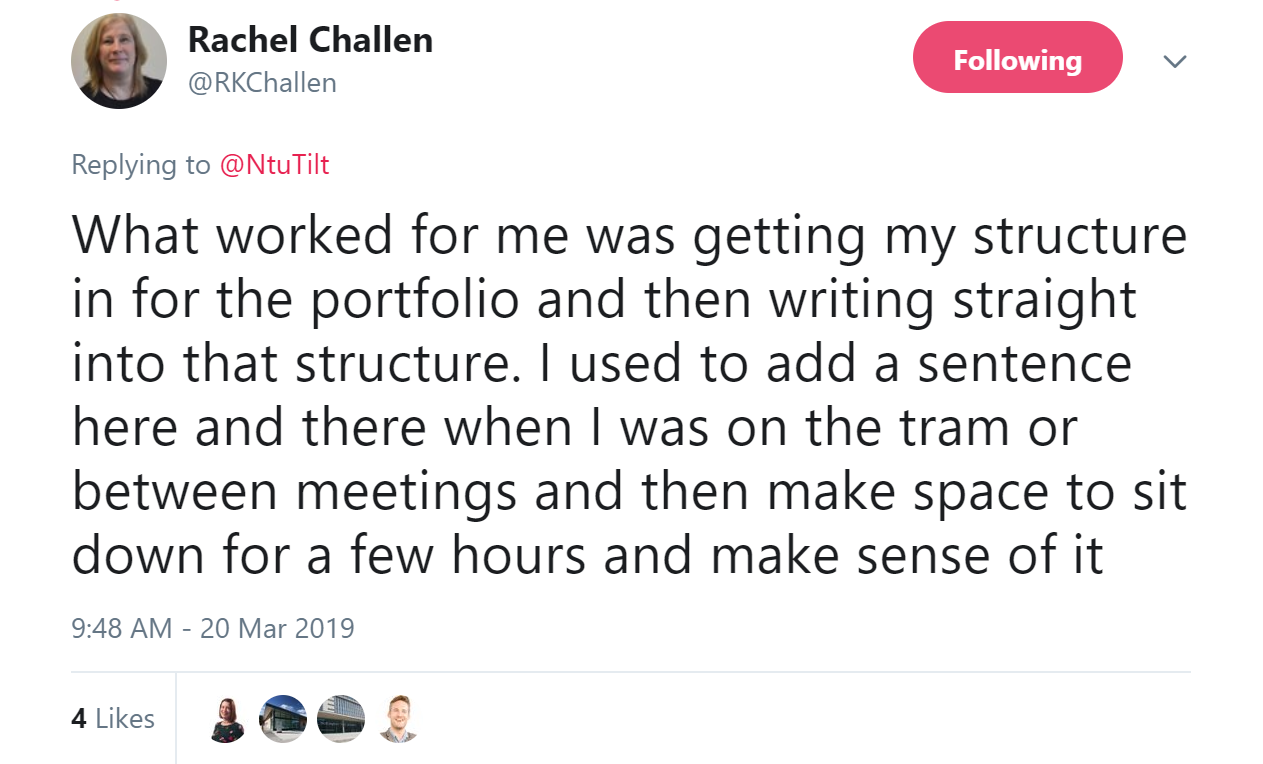
So first and foremost know how you write best; find your place to write, find your set up but do allow the time necessary for fulfilling a fellowship submission. When we talk with colleagues who didn’t achieve fellowship the first time around, they often concede that it was squeezed in and a bit of a rush job. You may find that you have to break down the task and keep topping the writing up as and when. @Sarah_wright1 praises Google Keep for building the claim iteratively. @RKChallen talks about writing on the go but then blocking out time to draw these snippets together.
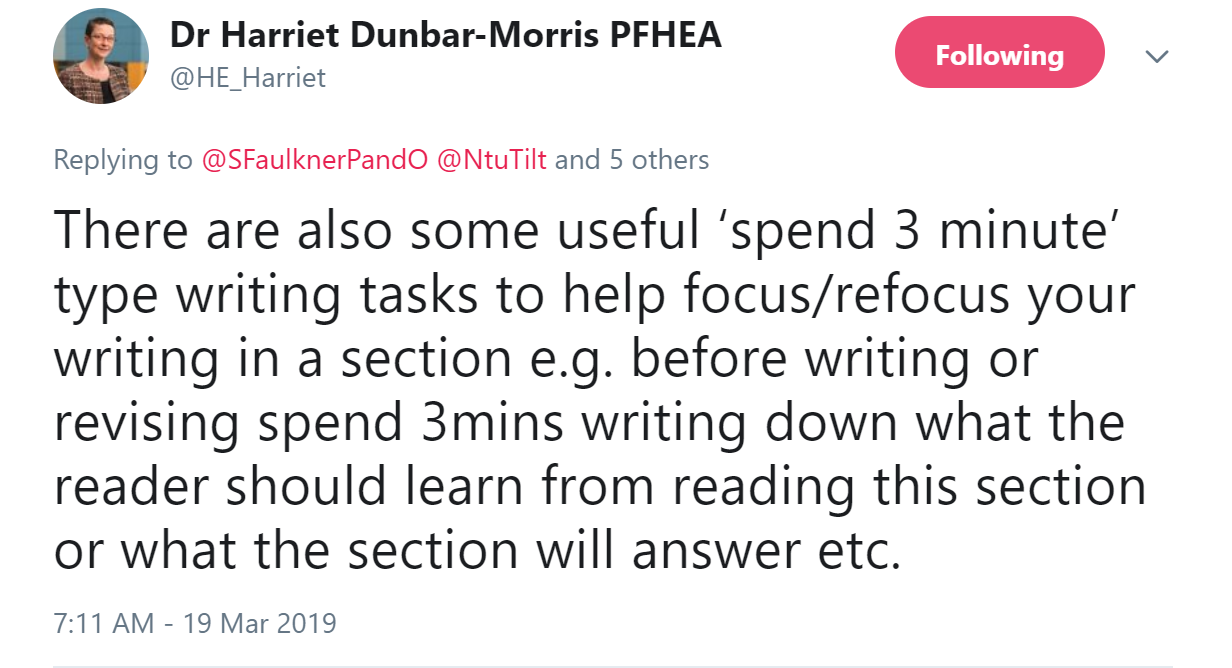
When speaking to people who has successfully achieved fellowship (all categories) the overwhelming advice is to just write- avoid the blank page situation and blurt it out. This advice stems from the knowledge that to produce a good submission requires a number of editing phases- rarely is this just a one shot activity. @HE_Harriet suggests a simple yet disciplined strategy to take bites out of the elephant
Finally try not to make this a lonely journey. A key message from the #fellowshipat4 discussion is that having a buddy or even a nag (someone who is aware of your fellowship agenda and also knows when you are procrastinating) is a valuable asset. A critical friend is an asset throughout the journey- from interviewing you and challenging you whilst you are mapping your practice to helping you refine your writing. Let’s get over hiding that we are writing up our fellowship claims!
Knowing your story
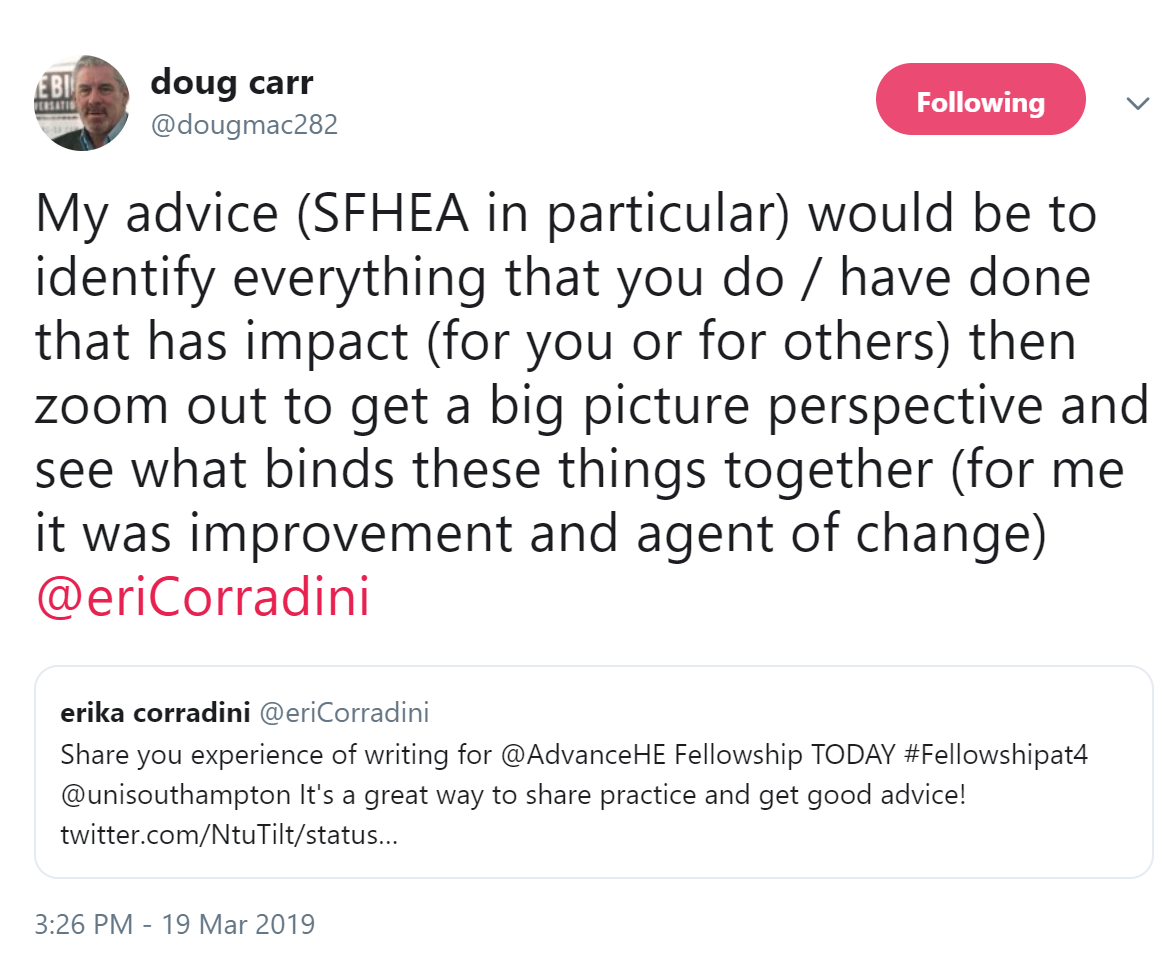
A worthwhile activity to help generate the raw material for your submission is to create a mindmap (in whatever format you are comfortable with). People sometimes find it useful to create this during or as part of a conversation with a peer. A bit of prompting can surface activities that you may have forgotten or indeed didn’t think worthy. Our advice is that you don’t start with the Ks and Vs as this can often limit your claim and people get into knots. Instead note down what you are proud of, what you are known for and what have you achieved. Harvesting the case studies or practice examples in this way can help convey the breadth and depth of what you do- including the possibility of making connections between the many roles/ activities you are managing. @dougmac282 advises you to switch between the micro and macro view as you plan out the direction of your claim.
This resonates with what @HE_Harriet terms the golden thread

So kick start your writing or even dust off your notes/drafts. There are many other writing tips on the #fellowshipat4 discussion.

 NTU Fellowship Community