CPD- collecting shiny things

Featured

So the Learning and Teaching conference season is kicking off which makes it a good time to talk Continuing Professional Development (CPD). CPD is a really significant part of your fellowship claim and a way to demonstrate how you are keeping abreast with sector challenges, evidence-based practice and pedagogical conversations (think A5 and most of the core knowledge in the Professional Standards Framework). Within the fellowship submission there is an opportunity to reflect how you have reinvested learning from CPD encounters back into your practice. There will be few face to face CPD opportunities this year. Whilst virtual CPD is opening up a wider menu of opportunities, we might need to tune in a little differently and soup up our powers of reflection to make it count. So here are some thoughts about collecting the shiny things to take back to our learning and teaching nest.

Active Reflection

There’s a danger that reflection is perceived only as a retrospective activity. Whilst there are numerous models of reflection many agree that the key to increasing the chance of practice change is the final “so what?” step to close the loop. But there is also an argument to make reflection a concurrent activity, i.e. reducing the time lag or gap between engaging in CPD, applying learning to ones own practice and making future plans. Then of course continuing to capture how this learning has made a difference to your practice in such a way that can be used to “cash in” for your fellowship claim.

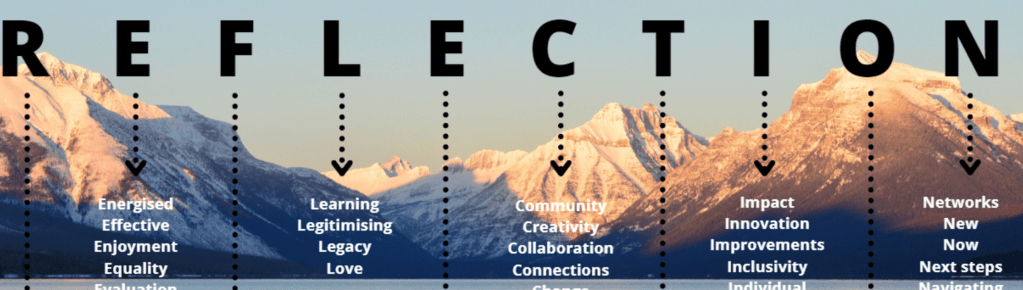
For a wider interpretation of reflection and a great prompt sheet check this out from Laura Stinson (@lstinson81) downloadable sheet accessed here
Here’s our Magpie Recommendations

  • Buddying up for reflection- reflecting as a team or with a colleague can really help untangle learning and it is more likely that this learning is integrated into practice with a shared purpose (and someone who can give you a friendly nudge if you have stalled in taking things forward);
  • Schedule the post-mortem- after CPD events it is easy to step back into your day job and the enthusiasm wanes along with the train of thought you had during the conference. The conference rear view mirror was something I previously explored here. Think about the immediate future and then perhaps a follow-up 3 months down the line- what have you actioned, trialled or adopted? Do write this down as this material will be useful when building a fellowship claim and reflecting on how you are responding to A5;
  • Screen fatigue will be a real issue in virtual conference attendance- how can you take an active break and consolidate learning whilst listening? Some advocate sketch-noting. Some great tips from Sylvia Duckworth (@sylviaduckworth) here; Using the Snipping Tool to build up a conference mood board- maybe via Jamboard– do this as a team and then you have also hit the first point about collaborative reflection?
  • There won’t be a coffee line so how are you going to replicate those important serendipitous moments with other delegates? Check out the delegate list and make a plan for connecting. What back-channels are the conference organisers offering- if nothing offered what could you set up e.g. a virtual coffee lounge or how about suggesting Randomised Coffee Trial? Sue Beckingham (@suebecks) provides some ideas about social media for conference learning here;
  • Translate ideas into tangible actions. Better still action whilst participating e.g. email a colleague with a brief synopsis of what you are hearing about and book in a time to hatch a plan. Have your MSTeams channels open and post thoughts in there to colleagues- thanks Rose for that idea (@rosepear) and sharing how you use OneNote as a kind of scrapbook for all bits and pieces. Rose likes to paste in screenshots, write in thoughts, or embed videos and other media mentioned in the meeting chat to refer to later. It also has a section and page navigation, so it’s easy to organise everything over a long period of time.
  • Learn aloud- How about a blog straight after your conference session which presents some initial thoughts and gut reactions to the ideas discussed. Capture your thinking on the hoof, as you listen and engage. Here’s a sheet that we have created for the plenary we will be facilitating at The University of Hull’s Teaching Excellence Academy 2021 Conference

Whatever CPD opportunities you engage in you will be in a better position to reinvest this learning back into your practice if you are purposeful in how you catalogue, reflect and apply what you hear. Happy collecting L&T Magpies!

Celebrating Women in HE Learning and Teaching #IWD2021

Featured

At the end of last month we held our assessment panel, awarding HEA Fellowship to a number of NTU colleagues. At NTU we are accredited by AdvanceHE to award 4 categories of fellowship to recognise colleagues’ contribution to learning and teaching. As a way to celebrate International Women’s Day 2021, let’s shine a light on the learning and teaching practice of 4 of our recent Fellowship Females.

Sara Baldwin, PFHEA, Director of Student Support Services

Sara was recently awarded Principal Fellow (PFHEA) in recognition of her transformational leadership of student services. Sara’s submission detailed sustained practice that has revolutionised the infrastructure and culture across the learner lifecycle.   Congratulations Sara!

Dr Claire Markham, FHEA, Lecturer in Sociology & Criminology @culturalclare

Claire was recently awarded Fellow (FHEA) with a submission full of great learning and teaching practice including a significant focus on sustainability. Claire also worked creatively to offer a student-centred approach to support hours via MSTeams including a seamless booking system linked to the VLE. Congratulations Claire!

Elaine Arici, SFHEA, Senior Lecturer, Nottingham Business School

Elaine was recently awarded Senior Fellow (SFHEA). Elaine’s case studies were full of good examples that showcased how she provided coaching and mentorship to colleagues. Elaine supports early career academics as they progress on the PG Cert in Learning and Teaching. Elaine also demonstrated her SFHEA profile by discussing her work as an external examiner. She is also remaining in good standing by working as a reviewer for our Fellowship Scheme. Congratulations Elaine!

Dr Itoro Ekpo, AFHEA, Associate Lecturer in Human Resource Management 

Itoro was recently awarded Associate Fellow (AFHEA). Itoro’s case studies discussed how she has brought some gamification into the classroom. The learners she worked with reported how this feedback opportunity enriched their learning experience. Over the last year, Itoro has been embedding learning she gained from attending a professional conference on assessment and feedback- with great results! Congratulations Itoro!

Ready to begin or continue your fellowship journey?

Connect with NTU colleagues and the Fellowship team on MS Teams. Here you will find resources and details about development events (synchronous and asynchronous) that will support you making a fellowship claim.

A Rich Tapestry of Learning & Teaching

Featured

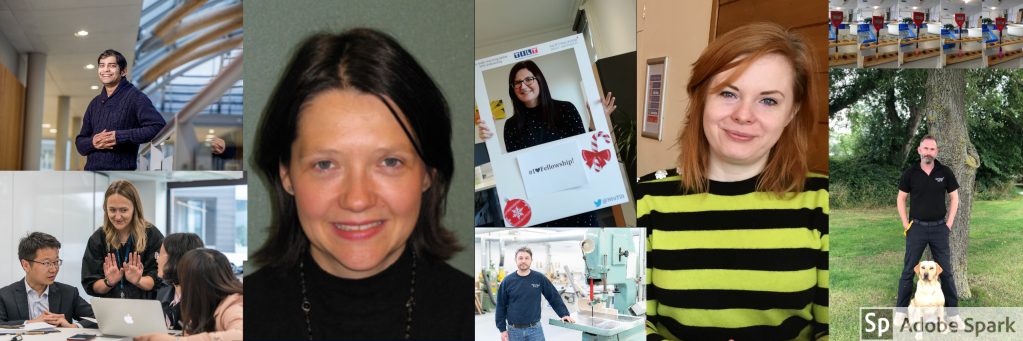
Applying for HEA Fellowship through the NTU Professional Recognition Scheme is about making sure you can evidence how your practice is making a difference to learning and teaching and gaining recognition for your work. And this isn’t just for lecturers. We have a large Fellowship community at NTU with over 1,300 Fellows working across different schools, disciplines and roles. Lots of NTU colleagues have been awarded Fellowship from their work within roles as technicians, employability consultants, researchers, educational developers and student support colleagues.

Sometimes it’s hard to see your claim to Fellowship. So, we thought we’d share some recent examples of colleagues who have achieved Fellowship status from a range of different roles to highlight this diversity and encourage you to join the NTU Fellowship community.

Meet the Associate Fellows

Associate Fellow is the appropriate category for individuals who have a narrow scope of practice in learning and teaching (i.e. their experience and evidence represents a limited number of the areas of activity on the UKPSF). Often associate fellows are individuals starting out their academic career and are new to teaching or they are undertaking supporting roles.

Katie Longsdale (AFHEA), Science Technician

Katie submitted case studies about her achievements supporting lecturers in the Secondary Science Education team for Initial Teacher Training which helps prepare trainee teachers for careers in Secondary Science Education.

Katie’s case studies discussed how she applies her professional knowledge to help students consider how they might develop practical science lessons within the school environment. Katie told the story of how she works with initial teacher training students using role modelling and demonstrations in preparation for these students entering their teaching careers.

Laura Stinson (AFHEA), Academic Practice Advisor

Laura works within the Academic Practice Team and helps other colleagues develop their submissions. Laura focused her claim on the mentoring work she had undertaken with placement students and supporting them to develop their employability skills through volunteering opportunities with local secondary schools. This was before Laura joined NTU, but this is still valid when making a Fellowship claim.

Richard Plant (AFHEA), Technical Team Leader (Animal), School of Animal Rural and Environmental Sciences

Richard’s case studies referred to the use of multimedia within demonstrations that support students learning how to handle animals. Richard shared with the reviewers the variety of ways he sets up the classroom to enable more collaborative and peer learning. Importantly, Richard also presented that he had received very positive feedback from students about his approach.

Meet the Fellows

The category of Fellow describes someone who has a broad understanding of learning and teaching and can demonstrate all areas of activity. This can be evidenced even if the individual isn’t in a lecturing role.

Ellie Howitt (FHEA), Learning Designer

Ellie was awarded FHEA based on one of her case studies referring to her work designing and delivering SCALE-UP induction sessions for academic, support and professional NTU staff. This practice was not linked to them directly working with students; however, their work was influencing the practice of those who would then go on to deliver SCALE-UP sessions to students.

Rish Baruah (FHEA), Career Consultant

Rish achieved his Fellowship by presenting his work designing and planning learning interactions to improve NTU students’ employability skills. Rish’s submission discusses his use of activities such as a CV card sort to help students consider appropriate language and phrases. Rish also presented his use of social media and blogging as a means of engagement with students with the impact being demonstrated through web analytics.

Meet the Senior Fellows

Senior Fellow is awarded to individuals with evidence of sustained effectiveness in learning and teaching. Case studies for this category must also highlight how an individual has influenced the practice of others to improve the learner experience.

Vanessa Dodd, (SFHEA), Educational Research and Evaluation Specialist

Alongside her international teaching experience, Vanessa presented evidence of how leading an educational research project was influencing the academic practice at NTU and the wider HE sector. Vanessa’s research into the value and experience of student placements has informed policy development and curriculum design.

Kerry Truman (SFHEA), Technical Team Leader, School of Architecture Design and the Built Environment

Kerry demonstrated his academic leadership through a series of case studies, including how he had redesigned workshop inductions into a virtual experience and how he has established the NTU Maker Club.

Michele Zala (SFHEA), Careers Consultant Team Manager

Michele was awarded Senior Fellow for her work across two HE institutions (NTU and Loughborough University). Michele talked about how she implemented a series of action-based realistic learning simulations/workshops of large Employers Assessment Centres, enabling students from all schools to work together to learn from employers and from peers. Michele also led on a series of bespoke workshops, events and careers interventions for the international student community.

So, you can see that a wide variety of colleagues, all in different roles, have gained recognition for their work in learning and teaching. Congratulations to all the colleagues who have achieved their Fellowship status. Hopefully, we have debunked the theory that Fellowship is just for teaching staff – are you ready to gain recognition?

Visit our NOW Learning Room to find out more. You can also follow our Fellowship conversations on @NTUTilt #NTUwritenow

Pivot? More of a leap

Featured

How do you best support colleagues to achieve their fellowship status through the institution’s Professional Recognition Team? This is a question that rolls backwards and forwards within our team. A nice little wicked issue, right? Wicked in the sense that there are many grey areas and design knots to unpick within such a dynamic environment. Should we split categories up for support sessions or is there a beauty in seeing breadth of practice and interaction across the UKPSF? Is there something to be said about timing support in relation to need- that “just in time” training. We see individuals across the spectrum of readiness for writing up their practice- from pre-contemplation stage right through to requiring final editorial input. Then there is the age old conundrum of matching up expectations from candidates with the capacity of a service or indeed (yes, sounds pompous….) but delivering support that achieves results rather than what is comfortable. That final comment relates to knowing when to stop giving advice pre-writing and supporting a person to start and continue.

Ping…COVID-19

Like most learning provision we’ve had to pivot our offer. We had planned this year to begin developing a more blended approach to supporting fellowship based on the assumptions above and feedback from our communtiy. The wholescale, cross-institutional shift to virtual provision however meant our slow and planned entry to online support had to pick up pace. We had several face-to-face workshops that needed a revised format and so with 2 days to prep we were running writing sessions and 1:1 support via MSTeams. Two months down the line we are ready to pause and reflect.

Manipulating MSTeams for Fellowship Writing Session?

We were keen to keep hold of the various activities we use in the face to face workshop that help participants surface appropriate fellowship material and promote writing productivity. We also needed a space that would allow some participants to join a “scheduled” workshop but also be welcoming to those who needed to dip in and out or enter the space when their calendars allowed (we were really aware that many colleagues wishing to write up their fellowship were also frantically supporting learners in significantly different formats).

We used the posts to serve up the activities that help individuals progress their writing. See examples below;

Notice the colour-coded step number? That was our workaround as the order of posts changes when people reply- the forthcoming pinned post facility might help with this. We also repeated the colour-coding through our agenda to help with navigating the activities.

Posts contained a series of activities (sometimes linking to narrated powerpoints, prepopulated padlets and our fellowship biteables). The activities then lead onto our NTUwritenow format which involves a series of pomodoro writing bursts. Whilst the participants can work through the activities at their own pace we do intersperse the writing throughout the day with optional drop-ins using the “meet now” facility. During these drop-ins we encourage participants to share progress and practice whilst facilitating discussion about the place of pedagogy, CPD and impact within a submission.

And so….

Yeah I know it is only fellowship (yes…professional development and recognition of good practice is important) but this model of capturing learning from the healthcare context is helpful. Here’s how our pivoting leap onto online is influencing our NTU fellowship support.

End– the complete social distancing perhaps but really we haven’t needed to put in short-term measures that haven’t found themselves being adapted for long term gain.

Amplify– Blend, blend and blend again! Going forward our new practice will include MSTeams-based writing sessions with synchronous and asynchronous opportunities. The feedback we have received suggests colleagues like choice, in terms of medium, pace and delivery. The ability to step on, join in, silently or vocally engage, park and return to fellowship via MSTeams are all pluses. No surprise there, just that the benefits of blended learning are emerging in fellowship support. The peer exchange is working well and so is the feeling that participants are supported through the process. The teams channels are now tangible destinations where a participant can track their progress through a navigable path and also meet other travellers on route! – something we weren’t necessarily achieving on our VLE space. However within the channels we are also able to repurpose and re-serve material we have stored on our VLE using the tabs.

Let Go– Dependence on face to face is high up there. But so is rejecting the idea that the pursuit of fellowship is a lonely/ solitary endeavour. We have been struck by how collegiate it can be, the sharing of learning and teaching practice alongside the sharing of “how I am doing this fellowship thing” has been tremendous.

Restart– MSTeams is a find for our scheme support but spending time with colleagues on their campuses alongside their students, classrooms/labs/etc is not only really pleasurable but also brings to the fore the diversity of teaching across NTU in a much more visceral way. This is important knowledge so we don’t loose touch with the variety of teaching and learning modalities and continue to ensure our scheme is inclusive.

It would be great to hear how other schemes are adapting their support offer through lockdown and beyond. You can engage with all things NTU Fellowship by following @NTUTilt #NtuWritenow

Meet your Fellow Fellows

Featured

Learning from Fellowship stories

NTU Festive Fellowship was the spirit this December and this meant a series of workshops for NTU colleagues developing their fellowship claims.  As part of the session we asked fellow Fellows to join us to tell their Fellowship Story. So, what did we learn?

Story #1

Kerry Truman is a Technical Team Leader in the School of Architecture, Design and Built Environment @kerry_truman

Kerry admits he is inherently curious and pushes his teaching practice to new places but he also admits that as a technician he didn’t know if Fellowship was the right path for him. Something we are finding at NTU is that more and more “non traditional” submissions are coming through and Kerry’s was one of them. With his Senior Fellowship in the bag, Kerry shared his thoughts about how best to progress a submission. Kerry talked about making sure that you don’t lose your voice as you write and to ‘be you’. One method Kerry found useful was working with a critical friend to read and talk through your submission. Kerry shared that he found it very hard to get things down on paper so he gained a lot from having a conversation with a colleague who helped him get his ideas in order and onto paper. Using that ‘Critical Friend’ can be so useful in organising your practice into a format that a reviewer can navigate. Sometimes you know what you are doing but putting it into writing can be hard!

Story #2

Michael McCann is a Lecturer in Economics

Michael gained his senior fellowship earlier this year. For his SFHEA claim Michael demonstrated how he successfully embedded Bloomberg Trading Room into his classroom as a way to improve engagement and attendance. His message to colleagues developing their fellowship claim was very clear. Talk about what you did. The ‘I’ is so important in a submission and you need to shout about your input and impact. It is a bit like defining your DNA fingerprint on the educational initiative.

We are always telling people to leave their modesty at the door and it’s so true! An interesting point that Michael made was in regard to how to structure your submission. He suggested that people consider what the reviewer needs to know first. What case study is going to draw the reviewer in and make them quickly understand your practice? We always talk about ensuring you set the context in which you work and making it clear to the reviewer what you do.

The final learning point that we can take from Michael’s story is the power of reflective practice.  Reflection is an area that Michael is very passionate about and he admitted that before applying for Fellow he didn’t reflect as much as he does now. Reflection is such an important part of your teaching and learning journey. Too often do academics not take the time to sit and reflect on what is working and what is not. It’s a key tool to use and can be done through official channels such as Module reports and EVASYS or on a more unofficial basis in terms of temperature checks throughout the year.

Story #3

Julia Davies is Head of Environmental Science

Julia’s story helped colleagues focus on a range of ideas and methods for collating a fellowship claim. She talked about the importance of collecting evidence from everywhere. We often talk about being more magpie in our sessions (thanks to @beckmccarter for that analogy). Keep everything and anything that can be used to show impact and evidence. Julia encouraged people to get involved with new initiatives in the university. This will help you to develop in your role and give more scope for your case studies. It’s so important to take on new challenges and keep things fresh. This can open up so many doors and can help you take the next step in your Fellowship journey.

And now a round of thanks:

Thank you to Julia, Michael and Kerry for sharing their fellowship experiences and lifting the curtain on their learning and teaching practice. Thank you to NTU colleagues who joined us for NTU Festive Fellowship sessions and opening the door on our advent calendar. Thank you to our scheme reviewers and NTU colleagues who have agreed to act as Fellowship Champions.

Remember to book your place for the Fellowship workshops for 2020 and make a fellowship claim!

Featured

That’s a wrap but what did we learn?

Thank you to @quirkywoodlands for generously creating this sketchnote based on #fellowshipat4 What a gift

This is the final day of Fellowship Week at NTU- this was a bit of an experiment. Our way of testing out some ideas to stretch and develop the ways in which we support NTU colleagues pursuing fellowship. We were at a good juncture to refresh our guidance and touchpoints with staff. Our observation was the often the completion of a fellowship submission, outside of the PGCert route, is isolating, fear-inducing and at times the response is to retreat, save it to later or hide out! In the back of our minds was the aspiration to turn up the volume on fellowship and the ambition to bring in the celebration to the process!

We have learnt a lot and we will be taking this learning forward as we develop our scheme. How annoying that we need to eat our own words here and become a more reflective provider of support (not just one that advocates others to reflect!) A couple of major learning points include:

  • People like to share and individuals gain a lot from the reassurance that others are in the same boat- how do we best encourage this sharing and the good conversations that can happen about fellowship?
  • Supplementing our “formal” documents with ones that use a more of a community-led voice rather than institutional branding/or text derived from accreditation documents. The intention here is to bring out the people side of fellowship with a hint of honesty and being purposeful about tapping into the personal motivations around fellowship
  • People tackle fellowship in many different ways- so our support mechanisms need to be flexible and agile.
  • We need to be making more use of the learning and teaching connections we have at the University- ensuring that fellowship isn’t a bolt on but an obvious link to scholarship and academic career development
  • How do we harness the wealth of support from a wider fellowship community?

A Fellowship Community

We started the week with a blog describing the local fellowship community at NTU- we end the week with recognition that this fellowship community doesn’t need to have a geographical boundary- in fact connections have been made with people working to schemes in Australia and Thailand alongside people who are working outside of an institution making direct applications to AdvanceHE. The community spirit has brought together different disciplines, institutions, roles and career phases, the unifying factor being the pursuit of doing a good job in learning and teaching.

#fellowshipat4 was a means of extending our fellowship community- on the hunch that there is fellowship life out there! What a response- I don’t mean numbers or trending (#brexit took care of that!) but the depth of investment in replying to one another, sharing and understanding about where people are at with fellowship (and their careers in learning and teaching) was impressive.

I am so far away from understanding this (but here lies a personal learning goal!)
Thank you to @scottturneruon yet another example of collaborative spirit

There was warmth, sharing, motivational soundbites and advice- a sense of gone through the pain and come out the other side. So the real beauty of #fellowshipat4 was that the advice came from the community rather than the guidance documents that we use to support fellowship. The authentic voice, lived experience voice wasn’t lost here.

Now what?

  • We have to take stock. There’s the beginnings of a rich resource but currently the raw material needs curating. We will share as we develop this.
  • We will continue to embrace the learning aloud philosophy and openness to share resources to our newly found community.
  • We will continue to provoke the fellowship conversations on twitter via @NtuTilt
  • We will be creative in our approaches and not shy away from prototyping. In fact watch this space as we begin a collaboration with NTU Writer in Residence @brizzaling 
  • We think we might have another bash at Fellowship Week next year!

Writing Hacks

Featured

The majority of schemes and routes to fellowship do depend on producing words. Words that convey experience, expertise, links to the UKPSF, values and impact on teaching and learning. No mean feat! Our 4th blog in this series for fellowship week at NTU is a practical share of writing tips. This blog is hot off the press (read here doing it the night before!) which means that we benefit from some gold dust from the #fellowshipat4 contributors. Thank you for being very generous in passing on your tips and strategies.

We all have individual quirks when we are faced with a writing task. Please be reassured that the tips listed here in this blog are not the only way to crack the fellowship nut. But they may provide you with some inspiration to try things out. The material here is also about giving you the motivation to kick start your writing and stick with it until you complete. Unlike many guidance notes on writing, this blog focuses on 2 themes Pre-contemplation and knowing your story.

Pre-contemplation

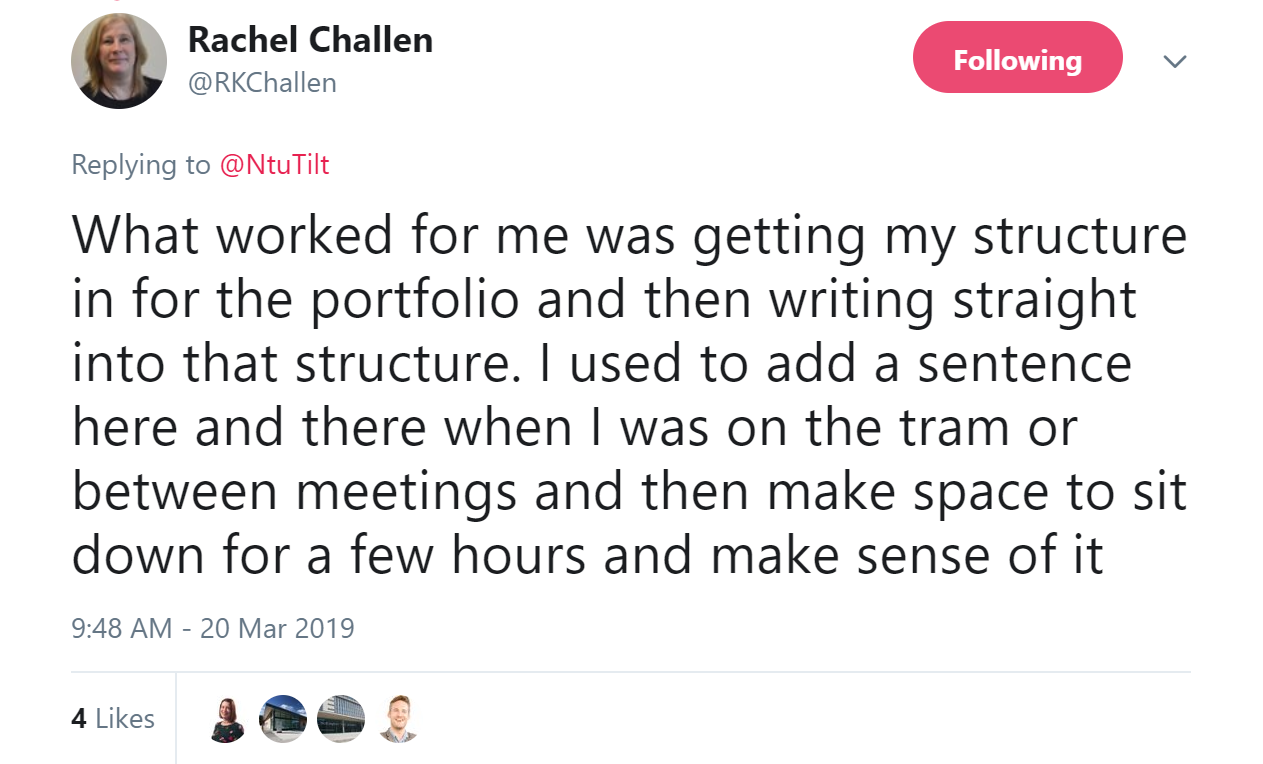
So first and foremost know how you write best; find your place to write, find your set up but do allow the time necessary for fulfilling a fellowship submission. When we talk with colleagues who didn’t achieve fellowship the first time around, they often concede that it was squeezed in and a bit of a rush job. You may find that you have to break down the task and keep topping the writing up as and when. @Sarah_wright1 praises Google Keep for building the claim iteratively. @RKChallen talks about writing on the go but then blocking out time to draw these snippets together.

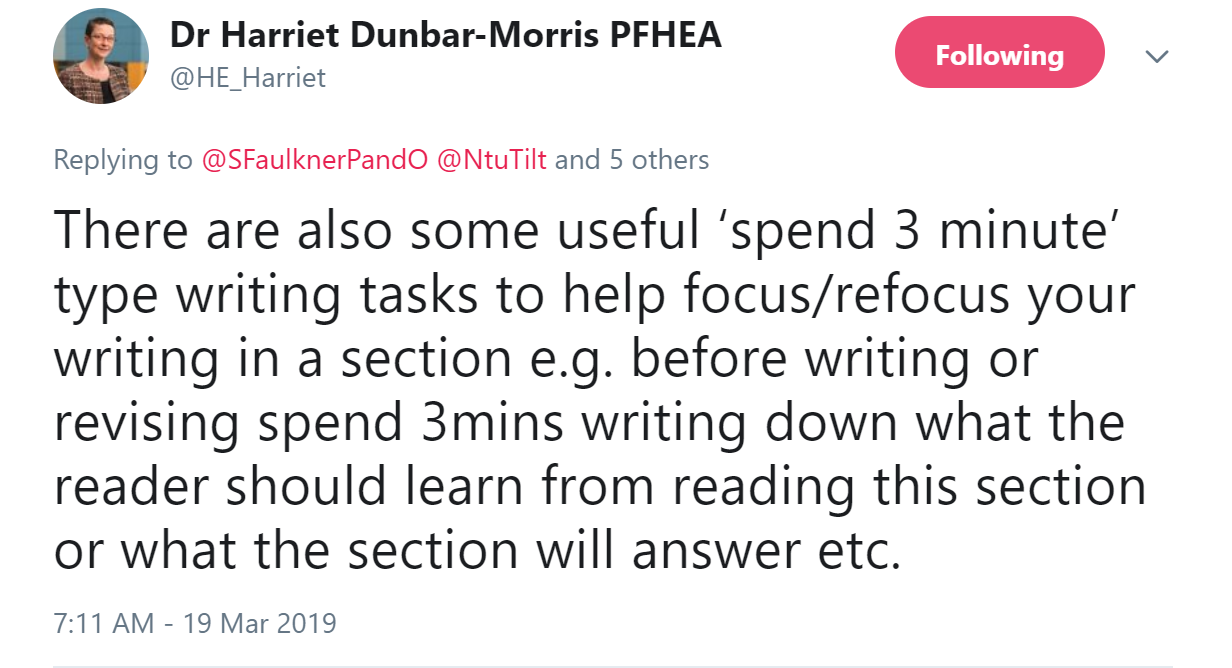
When speaking to people who has successfully achieved fellowship (all categories) the overwhelming advice is to just write- avoid the blank page situation and blurt it out. This advice stems from the knowledge that to produce a good submission requires a number of editing phases- rarely is this just a one shot activity. @HE_Harriet suggests a simple yet disciplined strategy to take bites out of the elephant

Finally try not to make this a lonely journey. A key message from the #fellowshipat4 discussion is that having a buddy or even a nag (someone who is aware of your fellowship agenda and also knows when you are procrastinating) is a valuable asset. A critical friend is an asset throughout the journey- from interviewing you and challenging you whilst you are mapping your practice to helping you refine your writing. Let’s get over hiding that we are writing up our fellowship claims!

Knowing your story

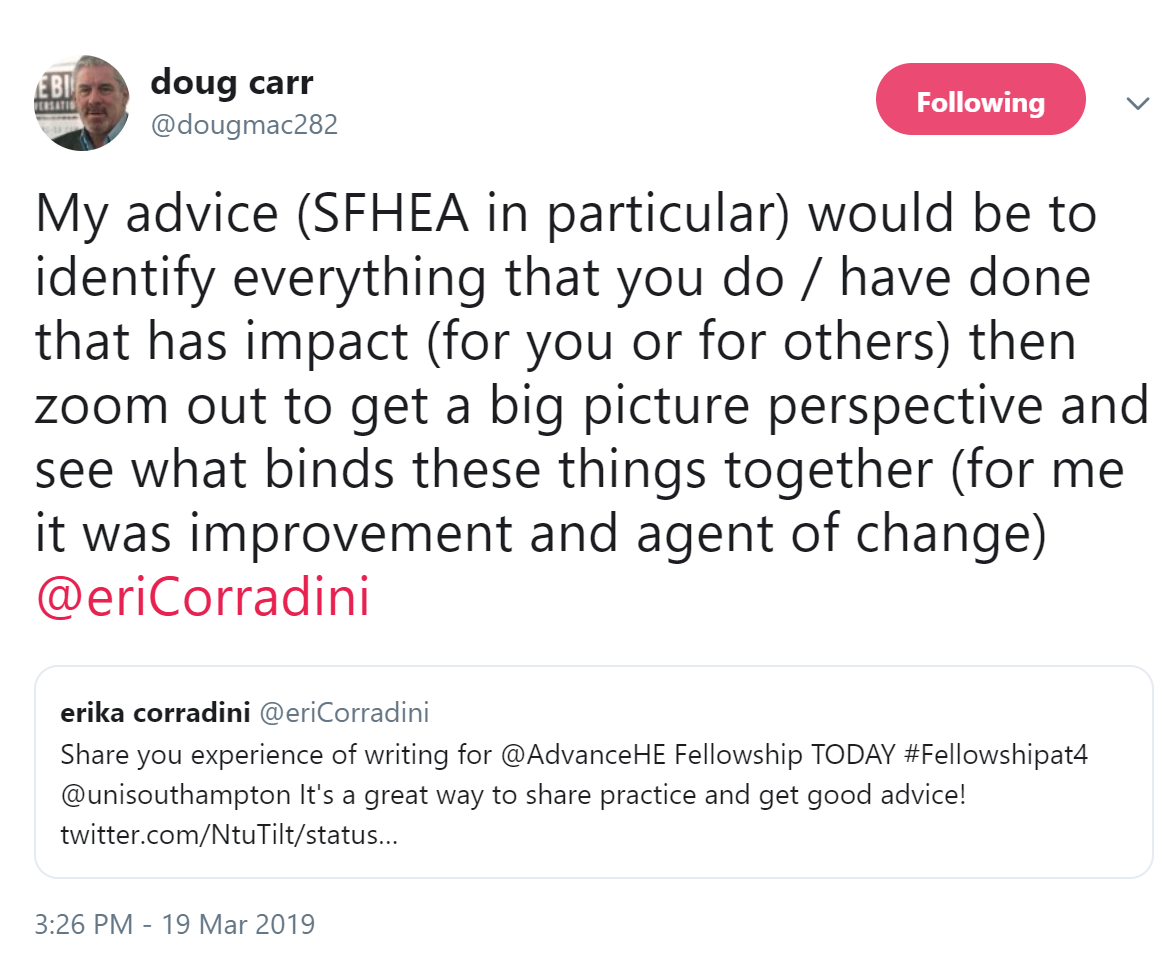
A worthwhile activity to help generate the raw material for your submission is to create a mindmap (in whatever format you are comfortable with). People sometimes find it useful to create this during or as part of a conversation with a peer. A bit of prompting can surface activities that you may have forgotten or indeed didn’t think worthy. Our advice is that you don’t start with the Ks and Vs as this can often limit your claim and people get into knots. Instead note down what you are proud of, what you are known for and what have you achieved. Harvesting the case studies or practice examples in this way can help convey the breadth and depth of what you do- including the possibility of making connections between the many roles/ activities you are managing. @dougmac282 advises you to switch between the micro and macro view as you plan out the direction of your claim.

This resonates with what @HE_Harriet terms the golden thread

So kick start your writing or even dust off your notes/drafts. There are many other writing tips on the #fellowshipat4 discussion.

Oh !!##!’@ Reflection?

Featured

Day 3 in the big brother…no wait, Day 3 of NTU Fellowship Week 2019. Here’s blog 3. Slightly different to the previous blog as this blog covers an alternative agenda. The blog below is also the blog that will stimulate the twitterchat hosted by #AdvanceHE_chat #LTHEchat on 27th March 8pm GMT. We thought it was pretty fitting to include some musings about reflection and the requirement to act as a reflective practitioner given that fellowship submissions depend on this way of thinking, acting and retelling.

Just reflecting on reflecting….sounds blissful doesn’t it? Well its not the zen-like status that might be conjured up. I am writing this blog in the middle of marking, teaching observations, supporting awards submission and working up plans to support our fellowship development at NTU. This is just the reality felt by many in teaching and learning- reflection whilst considered a necessary academic pursuit and much needed part of our professional lives often takes the back seat whilst we leap into the next task. The time to pause, take stock of activities and learn from experience to move our teaching practice forward is limited, largely on the hoof and predominantly a lonely activity. Whatever “model of reflection” called upon the loop is often left unclosed and learning from an experience/situation is not built into next steps.

There are many touchpoints for reflection in learning and teaching roles. These touchpoints can be categorised in terms of their presence in the teaching lifespan (pre-post teaching sessions, interactions with learners, period reviews, validations, curriculum designs, post-assessment stages) or indeed at junctions within our career development (appraisals, new portfolios of work, fellowship writing). Reflection can also straddle the continuum of formal or informal from writing up a case study for fellowship to the photocopy conversation which promoted a rethink about a session on your commute home- it is a very broad church.

Many of the how to books on being an academic point to the centrality of reflection. Ashwin’s (2015) edited book Reflective Teaching in Higher Education suggests that reflective activity links to curriculum development and the quality checkpoints in delivering a better student experience.

Reflection was deemed to be fundamental to development of a faculty- done in partnership with students the gain increased (Clayton and Ash, 2005). The work prompts two useful recommendations- firstly the notion of collaborative reflection (entering a reflective phase/activity with others and joining up the reflective outcomes in a more holistic way) and secondly involving students in the reflection soups up the outputs. With that flexibility noted and justification for engaging in the practice why is it such a struggle to be methodological in reflection? 

In supporting colleagues as they prepare for HEA fellowship you do hear a fair amount about reflection. Here’s some of the soundbites that represent the struggle to reflect:

•            I don’t have time– Reflection is often perceived as a luxury rather than a critical investment to prevent additional work later down the line.

•            It’s just not what we do– The practice of reflection doesn’t always rest well within the cultural norm of the discipline, department, institution and career point?

•            Who’s going to listen/ act on reflection? – How do you communicate the outcomes of a reflection? It is often hard to collate the by-products of your reflective activity which convey the value of the process. It is even harder to communicate the practice and value to others in order to mainstream reflection.

•            It’s all a bit hug a tree – Reflection has a bad reputation for being flimsy whereas in reality the actual disciplined habit of reflection is fairly difficult to embed. Furthermore a structured approach can elicit significant learning. Race (2015) recognises that surface level questioning produces surface level outputs. Race proposes that for deeper criticality the reflective questioning needs to be a series of clustered inquiry points that drill down and unpick the situation.

•            Who cares? – Reflection can feel very egocentric or indeed the dreaded imposter syndrome creeps in and your own reflective voice fails to carry weight (even with yourself). The cringe factor is turned up to 11. Furthermore it is rare for us to be granted “permission” to engage in a reflective process outside of discrete activities.

So there’s some work to do reimagining what reflection might look like in our context. The reimaging needs to challenge the stereotypes, needs to create a sense of urgency about engaging and needs locate reflective practice within the daily routines and cultural habits.

Let’s reflect on this together! Join in the #AdvanceHE_chat #LTHEchat on 27th March 20.00 GMT to compare notes on how you are using reflection.

  • We often talk about transformative learning experience in the context of what we offer up to our students…what does transformative learning mean in the way we develop as teachers/academics/people involved in learning (whatever you call yourselves!) and how important is reflection in that?
  • How would you reimagine reflection to work for you and your academic practice?
  • What are the support mechanisms to nurture reflective practice to make it common practice?

References

Clayton, P & Ash, S. (2005) “Reflection as a key component in faculty development”, On the Horizon, Vol. 13 Issue: 3, pp.161-169, https://doi.org/10.1108/10748120510618187

Race, P. (2015) 4th ed. The Lecturer’s Toolkit: A practical guide to assessment, learning and teaching Oxon, Routledge

Fellowship Myth Busting!

Featured
Zapping the Fellowship Myths

So second day of NTU Fellowship week, second blog. In this blog we are going to face up to some myths that float about and at times get in the way of colleagues engaging with fellowship. The elements of this blog are reflected in the guidance you can find on the NOW learning room to support you as you write up your fellowship discussion.

After discussing this with our reviewers, and a quick shout out on twitter, here are the biggest culprits that we need to shut down about fellowship:

  1. You must progress through the fellowship categories one at a time, beginning with Associate Fellow This just isn’t the case. The term category rather than level is very purposeful. Finding yourself on the UKPSF is about linking your experience and current practice with the descriptors. This means that you can “enter” the UKPSF with a direct claim for SFHEA without having even held FHEA. It isn’t linear. In the same way associate fellow isn’t a “basic” version of fellow but just represents the areas of activity a person is engaging in. It is worth completing the Fellowship Category Tool from AdvanceHE as this helps you locate yourself on the UKPSF and the relevant category according to your activity.
  2. You must be a manager to achieve Senior Fellow Zap, nope. A senior fellow claim does relate to academic leadership in the way an individual performs “Successful co-ordination, support, supervision, management and/ or mentoring of others (whether individuals and/or teams) in relation to teaching and learning” this may be part of a line-manager role but doesn’t have to be. You could be responding to the above SFHEA element through reviewing fellowship applications, sharing your pedagogic practice via staff development events, acting as an external examiner- there are many ways into this category.
  3. Fellowship is only for excellent university educators – This is a tough one because excellence is… well excellent. However thank you to @AbbyCathcart1 QUT, Australia, for the reminder that “the beauty of the PSF is it’s focus on effectiveness instead”. Your claim must meet the threshold set out in the category descriptors but context is important so it is critical you justify what you have implemented, why it was important for your situation and what has been the impact.
  4. Fellowship is only for teachers/ academics– The UKPSF appreciates that there are many roles, individuals and teams who influence teaching and learning. The categories speak to this diversity, particularly for associate fellow and senior fellow as there is no need to be directly teaching students. Your claims need to illustrate how you are impacting on teaching and learning. Busted!
  5. I must to provide lots of references and citations – A fellowship claim isn’t like an academic assignment or an article. References citations may appear in your submission but likely to link to the way literature has influence/ inspired you to modify your practice. Or indeed you might be highlighting your own published work as evidence of impact and the way in which you have developed an expertise in a learning and teaching approach.
  6. Engagement in CPD needs to be a formal attendance to a workshop or training programme– Try to think broadly about how your practice has been shaped. Your CPD engagement might be a reading group, twitter opportunities including the very brill @lthechat or even charting the way you have learnt from participating in validation panels. Whatever the CPD format, the critical element is detailing how this has influenced your practice. Plus for SFHEA it is good to track how you have shared your CPD wealth with colleagues and peers.
  7. Finally, 7a-e! a) It’s very easy. b) It’s very hard. c) It can be done very quickly. d) It takes forever. e) This is not for the TEF’s benefit, it’s for your benefit. Thank you to @johngcanning who helped with this list! It goes without saying there are many interpretations and opinions about fellowship. Some sceptics, some converts and some avoiding it at all costs. Get to know your scheme, talk with others and be reassured….most people once achieved do comment on the usefulness and even enjoyment to be found in fellowship.

Our work busting fellowship myths will undoubtedly continue but hopefully this blog has hit a few of the big ones. Please do join the conversation #fellowshipat4

NTU Fellowship Community- More than numbers

Featured

Welcome to Fellowship Week 2019 at NTU. This is the first time we have hosted a fellowship week where we shine a light on professional recognition for learning and teaching at NTU.  This is an opportunity to turn up the volume on fellowship, share experiences and celebrate our learning and teaching landscape at NTU. But wait, over the week we are joined via #fellowshipat4 @NtuTilt by individuals across the UK and globally- so welcome!

But first a little local knowledge………………

In the Summer 2018, the NTU was re-accredited by AdvanceHE to award all categories of fellowship gained via submission to the scheme or by successful completion of the Postgraduate Certificate in Academic Practice. The award of fellowship and engagement in the Professional Standards Framework is based on the premise of reflective practice- the ability to bring criticality to your academic practice, to showcase your academic decisions and your effective responses to learning situations.

Like many institutions, we have taken several routes to embed professional recognition into the systems and structures of NTU- from placing emphasis on contractual requirements via linking to human resources and career pathways to signposting colleagues to support mechanisms. Our current puzzle is thinking about how we provide more flexibility in our support and approach. We are aware that not everyone likes to digest information in guidebooks or have time to attend formal workshops. What we have observed though is that when people get together and are invited to talk about their teaching and learning practice the room can light up! Fellowship week, the use of twitter and proactively sharing fellowship experiences is our way of testing the waters to create more of a social movement around fellowship.

A community at a glance

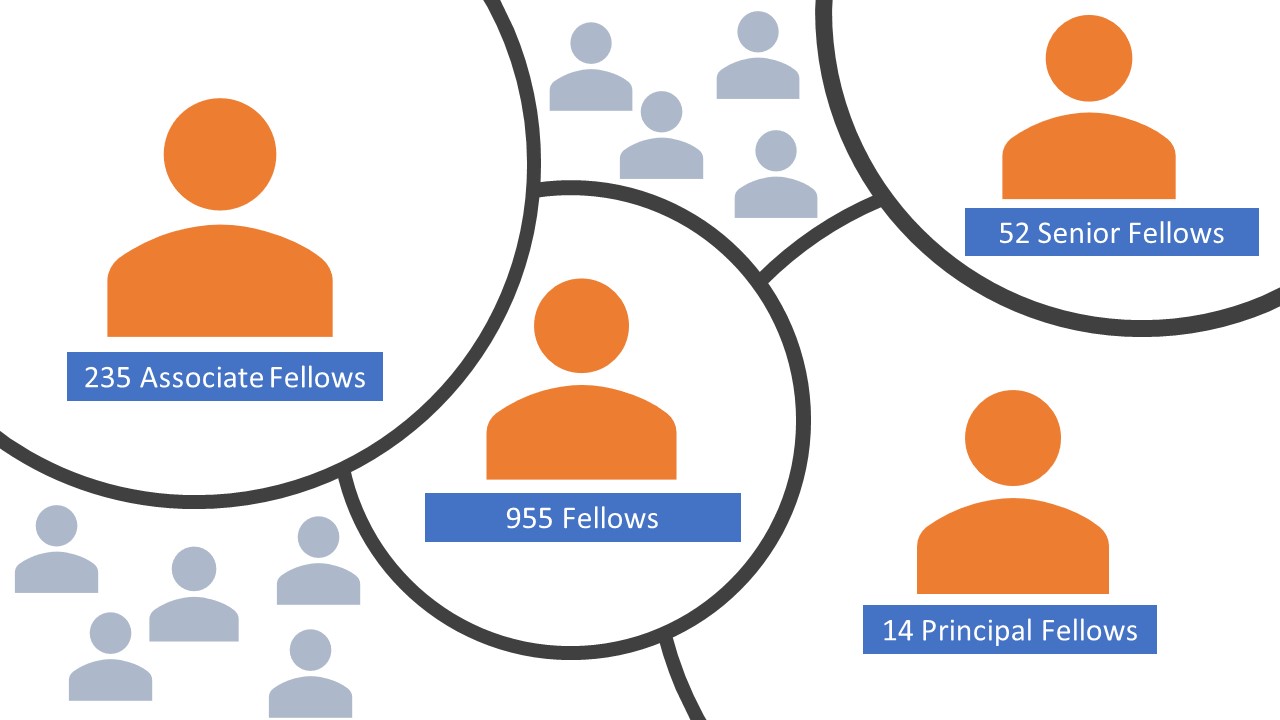
NTU Fellowship Community (data correct Feb 2019)

Here’s what our fellowship community looks like in terms of numbers across the categories. However the graphic hides the diversity of which we are proud of. Within those numbers are individuals from all the disciplines at NTU; individuals who are full time, part time and hourly paid lecturers; individuals who are technicians, work in support services, line managers, teachers and researchers. More diversity lies in the claims these individuals have authored to gain their fellowship including expertise in technology-enhanced learning, successful leaders, assessment gurus and those with a flair for creative pedagogies- to name but a few! A special mention and thanks goes out to our reviewers, advocates and mentors who support the fellowship scheme. These individuals are an essential part of our community, ensuring equity of experience, quality assurance and enhancing the way the scheme is developed. So whilst as a community there is a unifying thread of responding and upholding the UKPSF- the diversity is what makes our fellowship community a thriving and stimulating place.

Fellowship Community Action

So knowing more about our fellowship community should go some way in reassuring you that you are far from on your own in this fellowship game. In fact knock on your colleague’s door and ask where they are up to with their submission- who in your department is a reviewer?

With over 1,000 individuals, our fellowship community is a powerful resource. It however requires nurturing both formally and from the action of the individuals. Here’s a few ideas:

  • Tying your scholarship activity with fellowship requirements. If you are drafting a new module handbook or testing out a revised assessment strategy- spend 20 minutes to write a case study based on this experience.
  • Linking fellowship up with your research activity. If you are submitting abstracts to conferences think how you are embedding your research outputs into curricula. Doctoral supervisor? You can make a fellowship claim in this role
  • Whatever stage you are in your fellowship writing or whichever category you are aiming for check out the NOW Learning Room for support & resources
  • Share your fellowship status. Add your post-nominals to your email signature, update your HR teams with changes to your fellowship status.
  • Talking about your fellowship journey- what helped? how did you motivate yourself?
  • Seen a great piece of teaching or learning support? Encourage the person to write it up as a case study for their fellowship submission
  • We are looking for case studies, vlogs and blogs that tell others about fellowship. Interested in creating this (could be added as evidence for SFHEA!)
  • Join in with fellowship week! You can join a workshop (advertised in the NOW learning room) or keep dropping by this blog space. Over the week we will publish a blog a day covering writing tips & busting fellowship myths. We will also be uploading some videos on NOW from members of our fellowship community about their experiences.
  • Follow #fellowshipat4 and chip into the discussion about your fellowship activities
  • Don’t stop on Friday! Fellowship week is a kick start- we would like to learn from activities over the week but do plan to continue. In fact save the date 27th March 20.00GMT we will be joining @lthechat & @AdvanceHE_chat for a twitterchat to share ideas about reflective practice in HE.

My Fellowship Story- PFHEA

Dr Kate Cuthbert PFHEA

Whilst a lecturer at the University of Derby I completed a PG Cert in Learning and Teaching (with FHEA tagged on). I still refer to the action research I carried out in the final module of that course. I explored the use of creative activities for teaching abstract concepts (way ahead of serious lego!). I had pharmacists and nurses building 3-dimensional models of how they prescribed medicines (Blue Peter had nothing on us).

Then came a long drawn out period when my SFHEA submission, got half drafted, bounced around, got put on the shelf, got very dusty, sometimes saw the light of day but then got put back again. I get procrastination, I understand competing priorities but if I am honest the SFHEA could have been achieved 100 times over. It wasn’t about enough evidence but rather the discipline to sit down and write up (sound familiar?!)

So fast forward a number of years during which I had moved from lecturing to more faculty wide roles as Interprofessional Learning lead and educational development projects such as the Accreditation of Prior Learning for Zimbabwe Open University. I then moved from an institution to working nationally for the Higher Education Academy as a discipline lead alongside carrying out whole institutional change projects commissioned by HEA subscribers. With about 10 years of this type of educational project work (and 3 children later) I moved to NTU to lead the Professional Recognition Scheme. The irony of that “unsubmitted” SFHEA wasn’t lost on me. And so here began a mission (one that couldn’t end up back on the bookshelf gathering dust).

However, my practice had shifted from one which represented D3 as Senior Fellow (where I was influencing the practice of others) to strategic leadership of learning and teaching. So the PFHEA challenge was ahead.

What did I learn?

Lots about the process and about me as an educator and professional. Whilst the PFHEA deed was done back in July, I am still reflecting on my learning from the experience. That’s no great surprise given my role at NTU is supporting colleagues as they claim for fellowship. Anyway, here are a few headlines which will hopefully help as you build your fellowship claim.

A PF Voice

Thinking and curating is time well spent when assembling a PFHEA submission. I spent a long time becoming familiar from the D4 descriptors. I think in part this was about me developing the confidence to claim PF and taking ownership of the descriptors. I had to find my PF voice. I played about with what strategic leadership looked like in my practice- that’s going to look different in every submission- there’s not one size fits all. Getting myself to that authentic place was certainly helped along by having conversations with colleagues who knew my work and knew me. One conversation sticks in mind that gave me something to latch onto as I grew into my PFHEA voice. My colleague’s advice was to always keep in mind a persona that reflected my take on academic leadership, how I worked with others and what my contribution was. Please don’t laugh too loudly I am sharing this with friends right!? but as I wrote I kept in mind a kind of “Mary Portas of Learning and Teaching”! Ok so there is an element of tongue in cheek but really this helped me be bolder in my claims, it helped me sustain a consistent thread in my narrative and inspired my writing with the quirkiness that kept me writing! It does help to take you away from describing roles and take you back to the how do you do things and what has been achieved because of you. So, who will your fellowship persona be?

Evidence of Impact

Collecting evidence of your impact is a crucial part of the process. Certainly, for PFHEA you will be referring to strategic and policy documents you had a hand in creating. But that’s only part of the impact story. As with most fellowship submissions, it is good practice to layer evidence of impact. One layer maybe about pointing to the products of your labour, the next layer will perhaps be about the difference these products had to learning experience. This “making a difference” layer can be achieved in a number of ways, metrics that illustrate transformation or bringing in the voice of those who have benefited from your practice. This is where the cringing perhaps begins. Asking colleagues and your networks about how you have contributed to learning and teaching is a rich activity and one that is done all the time. As one colleague said to me “Shy bairns get nowt”! However, if you are using soundbites from others it is a good idea to be very specific with what you are asking from them. Share with them the descriptors you are claiming against. Ask them specifically to address an area of impact or the evidence you are seeking to provide the reviewers. Invite them to testify what a difference you have made to their practice, invite them to share any metrics that demonstrates transformation, invite them to be very specific what a difference your work has made to student learning in HE. This will then produce soundbites that are fit for each part of your submission and are distinguishable from one another. Be mindful of how you use evidence and the purpose of that evidence. For both SFHEA and PFHEA there is a mandate to portray sustained practice but also currency of practice. So really consider how evidence and experience builds on each other. For example, I undertook a large piece of work for the Tavistock and Portman Trust. Once this was completed as a consultant, I left them to it! But 5 years after that work I was randomly in the audience at a conference hearing their Director of Learning and Teaching discuss how this project had provided the foundation for their current learning provision and development strategy. So, whilst that piece of work would have featured in my submission the golden nugget was the breadcrumb trail back from my consultancy work to the present day. I could establish a sense of longevity and legacy of impact.

Nailing the category

Your submission must sit squarely in the category you are claiming. Yes, your practice and you as a person will naturally flex into D2, D3, D4 as the circumstances dictate but your claim must not slip into D3 if you are claiming D4. Otherwise you are creating doubt. My mentors red penned the material that was operational rather than strategic. This was hard. My leadership experience and approach weren’t always formal, and many times practice/grassroots led. Therefore, I had to position this as part of my strategic approach, evidencing how doing created the pull towards realising policy/strategy. But more importantly this was about selecting the right material for the claim and being single-minded about what was D4 rather than what was nice to share. This leads to another learning point about the importance at D4 about the Record of Educational Impact. The clue here is really in the title- stop yourself from providing a CV! A list of roles isn’t what is asked for but I fell into that trap. Reading advice from Lydia Arnold helped me cluster my achievements in such a way that demonstrated institutional/sector impact of my work.   

I’ve got tips aplenty! Even more so because I was referred on my first attempt and had to refine (ok read here rewrite) my submission. What got it there was being transparent with colleagues and sharing the pain. Fellowship can be lonely so it is great to have some buddies to help you craft. It is hard to share writing about yourself but getting over it is worth it!

What will I take away from the process of writing up my PFHEA……yes there is the effort required but it is a great way to revisit past work and importantly the people I worked with along the way.