


So second day of NTU Fellowship week, second blog. In this blog we are going to face up to some myths that float about and at times get in the way of colleagues engaging with fellowship. The elements of this blog are reflected in the guidance you can find on the NOW learning room to support you as you write up your fellowship discussion.
After discussing this with our reviewers, and a quick shout out on twitter, here are the biggest culprits that we need to shut down about fellowship:
- You must progress through the fellowship categories one at a time, beginning with Associate Fellow This just isn’t the case. The term category rather than level is very purposeful. Finding yourself on the UKPSF is about linking your experience and current practice with the descriptors. This means that you can “enter” the UKPSF with a direct claim for SFHEA without having even held FHEA. It isn’t linear. In the same way associate fellow isn’t a “basic” version of fellow but just represents the areas of activity a person is engaging in. It is worth completing the Fellowship Category Tool from AdvanceHE as this helps you locate yourself on the UKPSF and the relevant category according to your activity.
- You must be a manager to achieve Senior Fellow Zap, nope. A senior fellow claim does relate to academic leadership in the way an individual performs “Successful co-ordination, support, supervision, management and/ or mentoring of others (whether individuals and/or teams) in relation to teaching and learning” this may be part of a line-manager role but doesn’t have to be. You could be responding to the above SFHEA element through reviewing fellowship applications, sharing your pedagogic practice via staff development events, acting as an external examiner- there are many ways into this category.
- Fellowship is only for excellent university educators – This is a tough one because excellence is… well excellent. However thank you to @AbbyCathcart1 QUT, Australia, for the reminder that “the beauty of the PSF is it’s focus on effectiveness instead”. Your claim must meet the threshold set out in the category descriptors but context is important so it is critical you justify what you have implemented, why it was important for your situation and what has been the impact.
- Fellowship is only for teachers/ academics– The UKPSF appreciates that there are many roles, individuals and teams who influence teaching and learning. The categories speak to this diversity, particularly for associate fellow and senior fellow as there is no need to be directly teaching students. Your claims need to illustrate how you are impacting on teaching and learning. Busted!
- I must to provide lots of references and citations – A fellowship claim isn’t like an academic assignment or an article. References citations may appear in your submission but likely to link to the way literature has influence/ inspired you to modify your practice. Or indeed you might be highlighting your own published work as evidence of impact and the way in which you have developed an expertise in a learning and teaching approach.
- Engagement in CPD needs to be a formal attendance to a workshop or training programme– Try to think broadly about how your practice has been shaped. Your CPD engagement might be a reading group, twitter opportunities including the very brill @lthechat or even charting the way you have learnt from participating in validation panels. Whatever the CPD format, the critical element is detailing how this has influenced your practice. Plus for SFHEA it is good to track how you have shared your CPD wealth with colleagues and peers.
- Finally, 7a-e! a) It’s very easy. b) It’s very hard. c) It can be done very quickly. d) It takes forever. e) This is not for the TEF’s benefit, it’s for your benefit. Thank you to @johngcanning who helped with this list! It goes without saying there are many interpretations and opinions about fellowship. Some sceptics, some converts and some avoiding it at all costs. Get to know your scheme, talk with others and be reassured….most people once achieved do comment on the usefulness and even enjoyment to be found in fellowship.
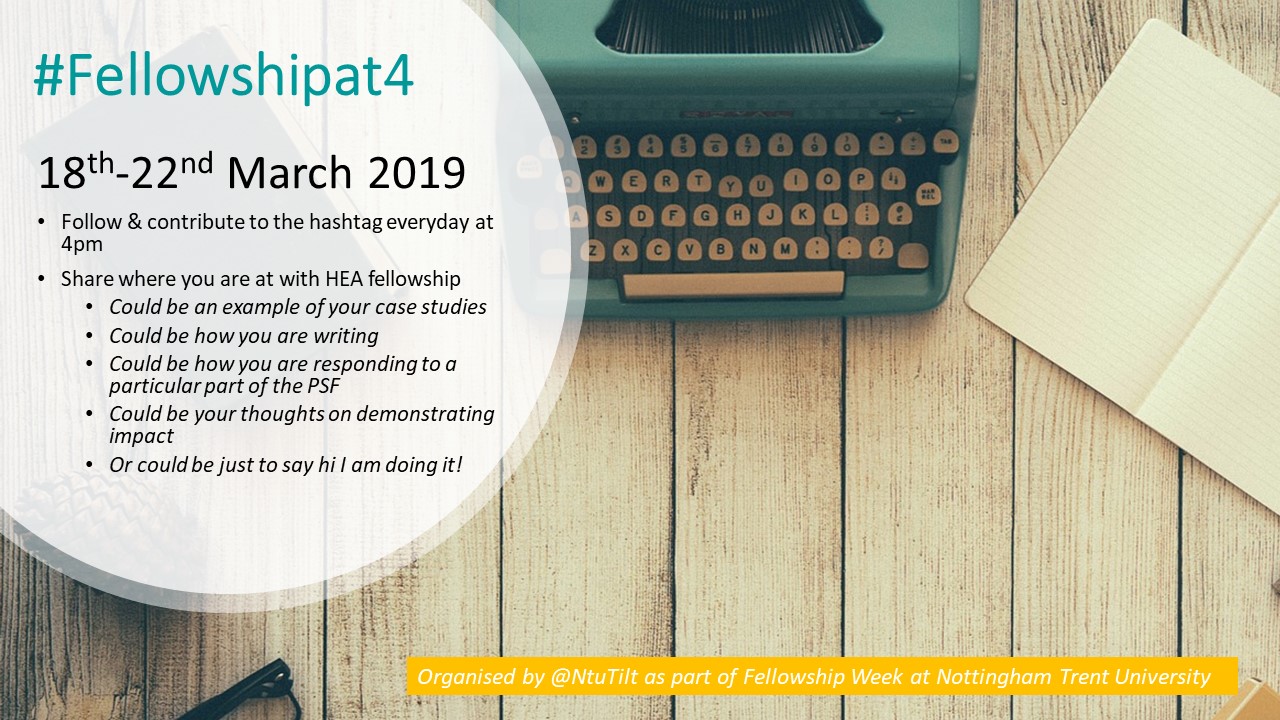
Our work busting fellowship myths will undoubtedly continue but hopefully this blog has hit a few of the big ones. Please do join the conversation #fellowshipat4


 NTU Fellowship Community